Feast of the Annunciation
The Feast of the Annunciation
March 25, 2026
Year A Readings
Isaiah 7:10-14, Psalm 40:5-10, Hebrews 10:4-10
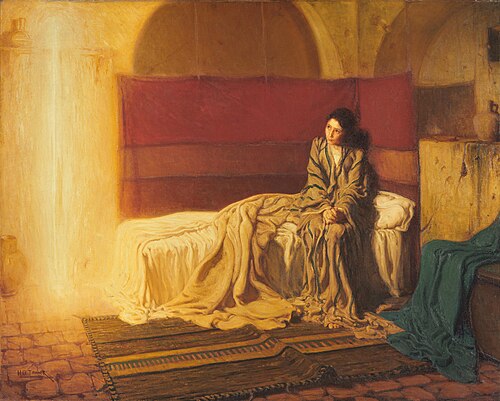
+ Luke 1:26-38
The Collect
Pour your grace into our hearts, O Lord, that we who have known the incarnation of your Son Jesus Christ, announced by an angel to the Virgin Mary, may by his cross and passion be brought to the glory of his resurrection; who lives and reigns with you, in the unity of the Holy Spirit, one God, now and for ever. Amen.
The Homily
Recently I worked with some of the young people in the parish to prepare them for the Rite of Confirmation, which they received this past Sunday. And in order to guide our newest professing members through a summary of the faith, I used the Apostles’ Creed. The Incarnation of Christ—by the Holy Spirit, from the Virgin Mary—occupies a central place in the theology of the Creed, for the early Christian already knew that if Jesus of Nazareth is not the Divine Being in person, our entire faith falls apart. I asked our young people if they had a hard time believing in the virgin birth, but none of them did. They all recognized that our consent to the possibility of that miracle simply means that we believe God exists. This is a straightforward faith: If the universe is, in fact, a Creation, then for the Creator to fertilize the ovum of a young woman is no big deal. If God can make the stars, and the nebulæ, and the planets, and the birds and bees and all of the trees… and us… then surely it should make no one incredulous to speak of a virgin conceiving a child by the power of that same Spirit who first hovered over the womb of the deep and brought forth light!
Perhaps we can allow our young people to teach us this evening.
Too often I think the cares of the adult world impede our ability to trust God the way Abraham did, in the beginning, or the way Mary did all those generations later. Planet Earth is so obviously broken by war and disease and hunger and heartache, despite the fact that human ingenuity and science provide the solutions to these terrors. And then, at a more local level, things aren’t much better: The truth is plain as day that we need each other, but we secretly cling to our acrimonious assumptions about those who are different from ourselves. And in this variable world and our changing lives, we lose our way along mundane paths of pettiness and self-gratification, instead of drawing deeply from the creating power of the Living Word and Holy Spirit.
We find it difficult to place our trust in “things unseen” …like a benevolent loving God …a God who might actually take some redeeming action among us. We fail to live in hope. Like Ahaz—we refuse to ask for signs, terrified that none will be given. We fail to come to God as a young adult, let alone as a child. As technology consumes our imaginations, we become less and less able to suspend our disbelief in order to consent to the possibility that God exists, that God is Spirit, and that Spirit could cause a young woman to become pregnant having never known a man. That kind of thing is all well and good for Netflix or HBO, we say, but it doesn’t make any sense or any difference in real life.
So we need the young people in our lives, for whom the world is still filled with mysterious possibility. We need to listen and learn from the human beings who have not yet stopped dreaming about their lives and pondering things in their hearts. We need people like Mary.
Her curiosity and wonder are essential in the times of discernment that lead to discipleship. Her willingness to trust is vital to those who long for the “dawn from on high to break upon us.” She must teach us how to consent to the possibilities that God is real, that God hasn’t forgotten us, and that the Spirit of Life is moving among us, that the Living Word is conceived within us, and that we might bear the Incarnate Love to a dying world.
Much has been made of Mary over the last two-thousand years, and much of our theology has missed the mark, infused as it is with the colors of Empire. Mary is not special because she was sinless or immaculately conceived, nor because her virginity was perpetual. Those doctrines are not necessary to salvation, and they obscure the far more startling truth that an ordinary teenager, from a backwater rural town, in a backwater province of the Roman Empire, had a heart so full of hope that she was able to overcome her fear and consent to the promise of God’s faithfulness and love. If Mary is perfect, she is remote. But if she is like us, then maybe we could become like her. Like Abraham, Mary believed God, and it was reckoned to her as righteousness. It’s a simple trust, with no more information than what we need to go on in the moment.
I wonder, can we do that?
Over the span of a human life, unconditional trust in the Spirit’s power and presence remains the beginning, middle, and end of being a follower of Jesus. If you will put your mind in its proper place and let your heart open like a morning glory, you may find that consenting to the mystery of Christ’s redeeming love is not so difficult. For your heart may be moved by the Archangels of peace, and you may find yourself pondering what sort of greeting that might be. And then, when you discern clearly what the Spirit is saying to you, repeat the words taught to us by a young woman as she worshiped in spirit and in truth: Let it be with me according to your Word.
For Mary is the prototype of the disciples of Jesus Christ. Before she was the Queen of Heaven, she was an ordinary person who said yes to Jesus. Mary is the first to walk the Pilgrim Way, a path that winds narrowly through the “slings and arrows of outrageous fortune,” leading ever on towards that New Creation where “the Lamb is the light of the city of God.” If you will contemplate the full measure of her trust, and the righteousness of her faith, you may find yourself ready to ask for her help as you would any friend; you may be ready to say
Hail Mary, full of grace, the Lord is with thee:
Blessèd art thou amongst women,
and blessed is the fruit of thy womb, Jesus.
Holy Mary, Mother of God,
pray for us sinners,
now, and at the hour of our death.
Amen.